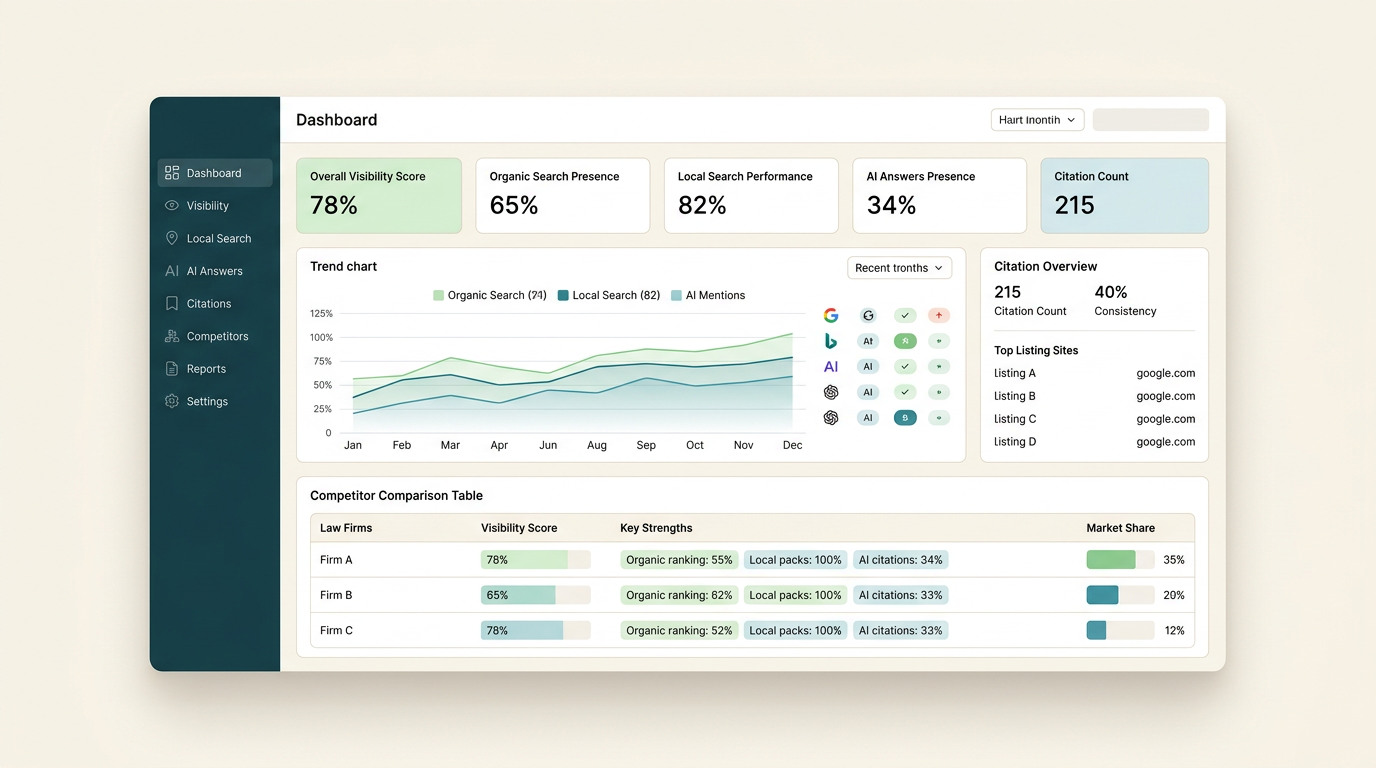
ContractPodAi Tool Profile
Vendor positioning alone does not show whether ContractPodAi fits a legal team’s workflow, integrations and control requirements. This page focuses on verified capabilities, practical fit, limitations and the questions buyers should test before adoption.
This analysis explores ContractPodAi, now rebranded as Leah, and its role in enterprise contract lifecycle management. It covers features, pricing, implementation realities, and strategic fit for legal operations teams in 2026.
Author: Dr. Rahul Dev: PhD Data Scientist, Technology Law & Patent Attorney, and AI Educator with 20+ years advising global CEOs and CXOs on tech, business, and legal innovation.
Connect on LinkedIn or explore more here.
Dr. Rahul Dev, an international patent attorney and technology business lawyer, draws on over two decades of hands-on experience advising enterprises on contract automation, AI-assisted legal workflows, and cross-border compliance programs anchored in real-world deployments of ContractPodAi for legal operations, including work on patent strategy and enterprise transactions.
With a PhD in Data Science and licensing across the US, Europe, and APAC, he has guided complex ContractPodAi implementations within GDPR, AI Act, and enterprise governance frameworks while managing high-volume contract portfolios alongside technology law guidance in regulated environments.
His work has been featured in Bloomberg and Economic Times, and includes com/">IP research and regulatory intelligence, reinforcing his authority on AI-driven contract lifecycle management systems such as ContractPodAi software.
This analysis reflects current 2026 developments, including the rebranding of ContractPodAi to Leah, an agentic AI platform unifying legal, procurement, and finance workflows, validated through recent industry reports and verified user outcomes describing ContractPodAi AI features and supported by legal service comparison frameworks.
As legal departments face rising regulatory scrutiny, contract volume, and AI adoption pressures, selecting a platform like ContractPodAi becomes a strategic decision with direct impact on risk, cost, and operational control, raising the question, Is ContractPodAi the best tool for contract management, particularly for teams investing in AI learning resources to scale adoption.
This article examines how ContractPodAi supports end-to-end contract lifecycle management, integrates agentic AI assistants, and compares with leading CLM tools in enterprise environments, including how ContractPodAi assist with contract automation in conjunction with blockchain legal analysis for digital transactions.
Readers will gain a clear understanding of features, pricing, implementation realities, competitive positioning, and whether ContractPodAi aligns with their legal operations strategy in 2026, including practical insights for adoption, compliance, and long-term value creation in complex organizations examining how can ContractPodAi improve enterprise legal workflows, often supported by technology consulting and AI strategy. The discussion also highlights measurable ROI benchmarks, implementation timelines, and governance considerations critical for scaling AI-driven contracting systems across global enterprises today with confidence and accountability standards in practice environments.
A 98% reduction in contract review time sounds impossible until you see Cushman & Wakefield compress a 10-hour process into 10 minutes. That single data point explains why enterprise legal teams are abandoning traditional workflows for AI-native platforms. ContractPodAi, now rebranded as Leah, sits at the center of this shift, and the decision to adopt it carries implications most executives have not fully mapped, especially when supported by structured AI coaching and executive AI education.
What Is ContractPodAi and How Does It Work
ContractPodAi software operates as an end-to-end contract lifecycle management platform built around a conversational AI assistant called Leah. The platform integrates generative AI through ChatGPT, Microsoft Azure, and IBM Watson to automate intake, review, drafting, negotiation, signing, and post-signing obligation tracking. Unlike point solutions that handle one phase, Leah orchestrates the entire contract journey from email request to renewal reminder.
The January 2026 rebrand to Leah reflects a deeper architectural change. The platform now functions as an agentic operating system, meaning it deploys specialized AI sub-agents across legal, procurement, finance, and sales without requiring manual handoffs. Features like Leah One Drop enable drag-and-drop contract uploads that auto-create records. Leah Insights delivers predictive analytics on negotiation history. Leah Draft handles conversational document creation with clause libraries spanning 65-plus languages.
Agentic AI transforms contract management from reactive document handling to proactive enterprise orchestration across every department.
This architectural approach positions ContractPodAi as a heavier-end CLM comparable to Ironclad and Icertis rather than lightweight tools like Lexion or SpotDraft.
Benefits of ContractPodAi in Contract Management
The concerns matter equally. Implementation timelines run 5 to 12 months. The learning curve is steep. Pricing remains opaque until late-stage negotiations. Organizations must staff dedicated resources to extract full value from the platform's capabilities.
ContractPodAi Pricing and Total Cost of Ownership
Enterprise buyers need honest numbers before engaging sales conversations. ContractPodAi pricing operates on a quote-based model with no self-serve tier. Mid-market deployments typically land in low six-figure annual contracts. Enterprise implementations push into mid-to-high six-figure territory annually, placing the platform alongside Ironclad and Evisort in cost positioning.
A multi-year contract-management deployment can require material software, implementation, integration and change-management resources. Buyers should obtain current vendor pricing and scope implementation costs against their own contract volume, integrations, migration complexity and support requirements rather than relying on a fixed universal investment assumption.
ContractPodAi pricing and implementation economics depend on scope, configuration, integrations and commercial terms. Suitability should be assessed from current first-party product information and the buyer's workflow needs.
Having mapped the landscape, here is how I have guided clients through this directly:
I have spent 20+ years advising executives where international patent law, technology business law, and AI strategy meet practical enterprise execution. In my work evaluating platforms such as ContractPodAi software, now rebranded as Leah, I look beyond feature lists to the issues that decide enterprise value: contract lifecycle management fit, regulatory exposure, patent defensibility, and whether AI-driven contract management will hold up across borders.
I have also worked with innovation-led companies protecting AI products through IP strategy while commercializing them in regulated markets. In one example, I supported the legal and technical positioning behind That same three-dimensional analysis matters when comparing ContractPodAi vs other contract management tools such as Ironclad, DocuSign CLM, Icertis, Agiloft, and Conga CLM: the best platform is the one that reduces cycle time, preserves IP ownership, and supports monetization without creating hidden legal debt.
What many executives still miss in 2025-2026 is that AI buying decisions now sit inside a tightening patent and regulatory environment. The Leah rebrand reflects a broader move from standalone review tools to agentic enterprise legal management, and that raises new questions around model governance, training-data controls, auditability, and ownership of AI-assisted outputs. Those are no longer technical side notes; they are board-level issues.
ContractPodAi vs Other Contract Management Tools
The competitive landscape for enterprise CLM platforms has consolidated around a handful of serious contenders. ContractPodAi competitors include Ironclad, DocuSign CLM, Evisort, Agiloft, Conga CLM, and Icertis. Each serves overlapping but distinct buyer profiles based on existing technology stacks, industry requirements, and operational maturity.
Leah's unique positioning centers on its embedded agentic OS for cross-functional orchestration. No other vendor in the 2025-2026 market offers the same depth of autonomous workflow capability spanning legal, procurement, finance, and sales in a single platform. The March 2025 Epiq partnership strengthens implementation support for enterprises adopting the agentic tier. The Vyapi partnership extends reach to SMBs in the U.S. market.
The best contract management platform reduces cycle time, preserves IP ownership, and supports monetization without creating hidden legal debt.
Organizations with deep Microsoft 365 footprints find natural integration advantages. UK and EU buyers benefit from regional pricing positioning. Early adopters seeking cutting-edge agentic capabilities will find Leah ahead of competitors still treating AI as a feature rather than an architecture.
Why Choose ContractPodAi for Legal Operations
The decision framework for ContractPodAi adoption comes down to organizational readiness: contract volume and complexity, process maturity, integration needs, data quality, governance and the resources available for implementation and change management. There is no reliable universal contract-count or investment threshold that defines an 'ideal' buyer; current vendor scope and the organization's own business case should control the decision.
The 2025-2026 trajectory points toward continued consolidation of CLM capabilities around agentic platforms. GenAI integration is now table stakes, not differentiator. The question becomes whether your organization can absorb the implementation timeline, manage the learning curve, and dedicate resources to ongoing optimization.
ContractPodAi ranks among the four or five strongest end-to-end CLM options for mid-market and enterprise in-house legal teams. For complex contract workflows spanning multiple departments, single-vendor coverage with embedded AI, and early access to agentic automation, the platform delivers documented results. This week, map your current contract volume, calculate your true review costs, and assess your legal operations maturity honestly. Then reach out to Dr. Rahul Dev to discuss whether ContractPodAi fits your enterprise architecture and regulatory environment before engaging vendor sales conversations.
Frequently Asked Questions
What is ContractPodAi?
What is ContractPodAi software used for in legal operations?
What is the pricing for ContractPodAi?
Implementation outcomes depend on the organisation's workflow, data quality, configuration, governance and adoption; unverified client-result claims should not be treated as evidence.
What is the role of AI in ContractPodAi's features?
What is ContractPodAi's impact on enterprise legal workflows?
Editorial note: TechCorpLegal summarizes public legal, regulatory, and technology materials in plain English. This page is informational only and is not legal advice. Readers should consult qualified counsel before acting on legal or compliance questions. This topic is also tracked in TechCorpLegal's LexOS intelligence system, which cross-references laws, jurisdictions, and legal tech tools. Have a question about this? Get in touch with Dr. Rahul Dev.