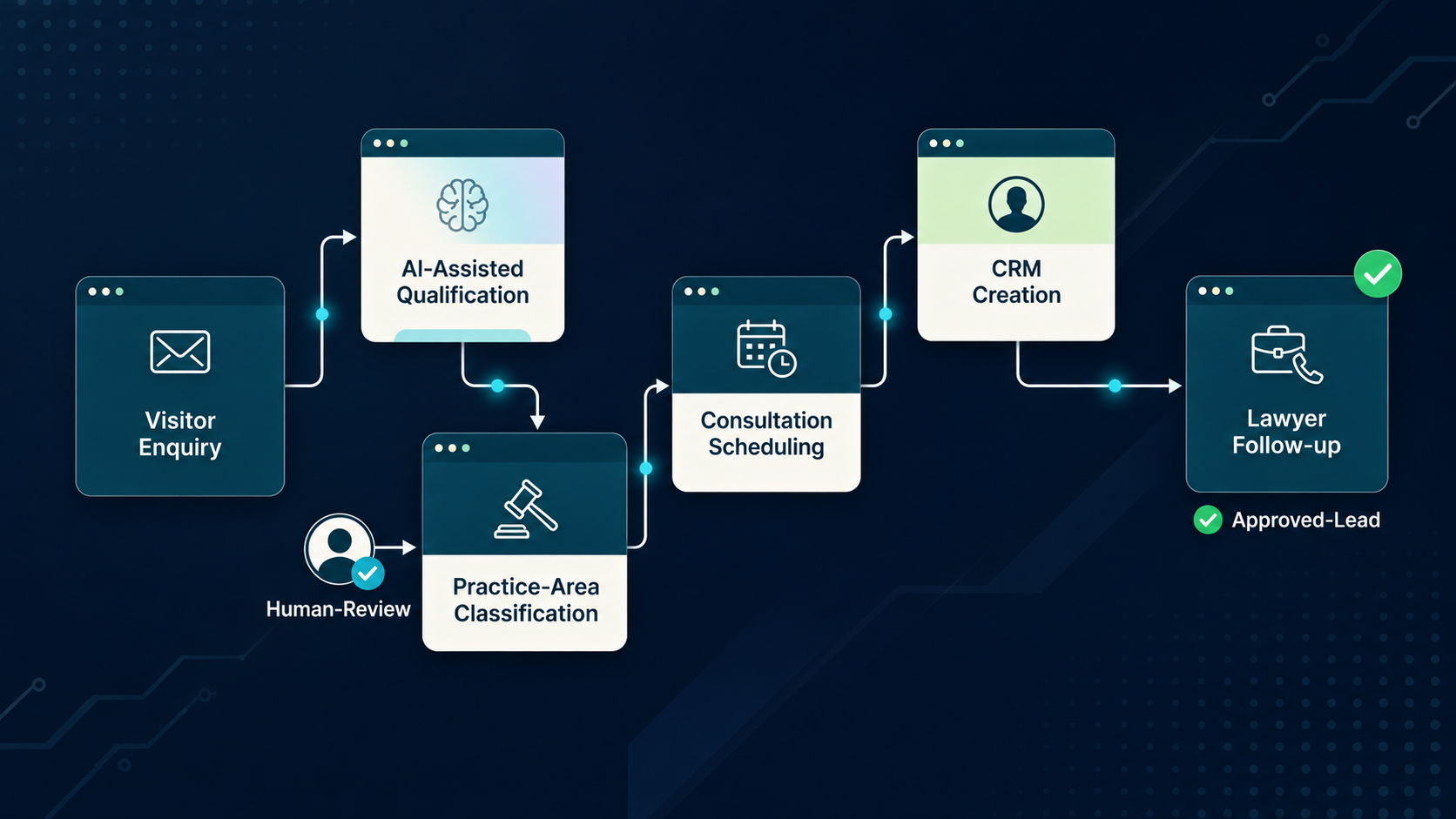
Assess technical fit, information permissions and a realistic pilot path before attempting integration. The process starts by checking the existing situation and the available evidence, not by assuming a particular AI tool is required. The right output is a clear decision record with owners, controls and the next review step.
What it means to connect CLM and legal AI
Connecting a contract lifecycle management system with legal AI may involve searching contract records, transferring selected fields, preparing an issue list or sending a proposed change for approval. Each task has a different information path. A feasibility study begins by defining the exact workflow and business owner, not by assuming a connector exists.
A useful starting test is to write down the precise decision: Can the particular contract system and AI application share the required information safely and lawfully? Identify the documents or people who can answer it and distinguish observed facts from assumptions. For the work component “Current systems and use-case inventory”, record the minimum evidence required before recommending a tool or a process change.
Which contract information needs to move, and why
Map what information is essential: agreement text, clause identifiers, counterparties, dates, approval status or selected metadata. Minimize what is shared. If only a small field is needed, copying an entire contract repository into another service creates unnecessary exposure and makes permission checks harder to explain.
Turn this into a reviewable task by asking who owns “Connector/access feasibility assessment”, which source records are current, and who may authorize the result. If the information comes from an AI output, verify it independently. A reviewer should be able to reject the result without losing the original evidence.
How roles, access permissions and data retention affect feasibility
Review which staff can see the source document, whether connector access mirrors that permission, and what audit and retention controls apply. Contract repositories frequently contain privileged or confidential information. A proposed integration should never elevate access merely because a technical account has broad administrative permissions.
The buyer should ask whether “Data-flow and approval map” addresses a skill gap, an unclear handoff or a genuine software limitation. Those require different responses. Document who makes the final selection and what remains outside the engagement, especially where vendor settings or professional rules apply.
Checking vendor features and account entitlements
Check official vendor documentation for the exact product edition, connector version, API capability, region and supported operation. Read access is different from creating or modifying a contract record. Document what is confirmed, what requires vendor clarification and what is unavailable before suggesting that a pilot can begin.
For “Pilot acceptance and security checklist”, review a small, authorized sample first. Check that the wording fits the intended audience, that any jurisdiction-sensitive statements are grounded, and that confidential information has not been used without permission. Keep a corrected version and an explanation of why the change was necessary.
Where human approval belongs in the contract process
Lawyers or designated contract owners should approve material clause deviations, risk classifications and external communications. An AI-produced summary may be useful as a draft but must not silently update an agreement or represent legal acceptance. Record the human checkpoint and what should happen when the proposed output conflicts with the underlying contract.
Use the “Current systems and use-case inventory” output as a handoff document: identify the next responsible person, the expected action and how completion can be checked. Record the route for uncertain cases instead of letting a system send a message or alter a file automatically.
Designing a limited, reversible integration test
A reversible pilot can use a small set of approved sample contracts and narrowly scoped permissions. Define expected outputs, failure conditions and a method to remove access. Compare the result with a human-reviewed baseline, including missed clauses and erroneous labels, instead of judging the pilot by how quickly it completes a demo.
When evaluating “Connector/access feasibility assessment”, use a simple evidence register with date, source, observed issue and follow-up owner. Do not convert unmeasured expectations into claims of improved quality or time savings. Establish the baseline and acceptance criteria before drawing a conclusion.
Reasons to defer or reject an integration
Defer integration when permission mapping is unclear, key features require unavailable entitlements, data-transfer locations are not acceptable, or the organization cannot name a responsible reviewer. A 'no-go' conclusion can be the correct outcome of an assessment. The assessment is not a security certification or an integration build.
An initial scope should specify what “Data-flow and approval map” will examine, which information is unavailable, and what would cause the work to stop. Review the findings with a decision-maker; if a technical or legal specialist is required, record that dependency rather than treating the study as complete.
What would a useful assessment or implementation plan produce?
The following table is a proposed scoping framework. It helps a buyer distinguish a meaningful work product from an attractive demonstration. The actual deliverables and responsible reviewers should be agreed before information is shared or configuration begins.
| Work component | Evidence or output to inspect | Who reviews it |
|---|---|---|
| Current systems and use-case inventory | Dated current-state inventory, owner and scope exclusions | Buyer/process owner |
| Connector/access feasibility assessment | Source register, factual checks and alternative options | Source or professional reviewer |
| Data-flow and approval map | Draft working map, documented tests and exception list | Appropriate legal/IT/security representative |
| Pilot acceptance and security checklist | Reviewer sign-off record, follow-up tasks and handover notes | Accountable decision-maker |
A four-step decision workflow
- Clarify the question: State the buyer decision and define what “Current systems and use-case inventory” must resolve.
- Collect approved evidence: Gather approved records for “Connector/access feasibility assessment” and label assumptions.
- Design and test: Prepare “Data-flow and approval map” using bounded examples and explicit stop rules.
- Review and decide: Use “Pilot acceptance and security checklist” to make a go, revise or defer decision with a named owner.
Illustrative exercise (not a client case study): The team traces a sample agreement from the CLM repository to a proposed summary workflow, confirming exactly which metadata is accessed and who authorizes the output. This is a planning illustration; its suitability must be checked against actual agreements, governing law, user permissions and platform features.
Important limitations and safeguards
A feasibility assessment cannot promise connector access or engineering delivery. Vendor rights, data flow, licences, permissions and security approval must be validated first.
Legal, privacy, security and operational obligations depend on jurisdiction, the nature of the information, the vendor's current documentation and the client's own policies. A training, assessment or process-design service does not itself authorize external disclosures, constitute a legal opinion, or prove technical fitness. Material decisions must remain with properly qualified and authorized people.
Frequently asked questions
Does every contract platform support AI connectors?
No universal availability should be assumed. Features, controls and administrator access depend on product, subscription, jurisdiction and configuration. Confirm the exact entitlement and approved data route with vendor documentation and the client administrator.
Can the assessment be done without production access?
A limited scoping and research phase can normally be considered separately from direct access or production configuration. The exact scope, platforms and people involved must be agreed. If specialist integration or privileged material is necessary, the engagement should stop for additional authorization.
Who should approve data connections?
Begin with public, synthetic or specifically approved data. The organization must decide whether confidential, personal or privileged information may be processed and under which terms and controls. Lawyers and responsible information owners should independently review consequential outputs before they are used.
Does this include building the integration?
This is a proposed decision-support and implementation-planning pathway, not an accreditation, vendor partnership, guarantee of results or automatic legal conclusion. The appropriate next step is to confirm the actual deliverables, limitations and reviewer responsibilities for assess technical fit, information permissions and a realistic pilot path before attempting integration..
Sources and verification
These primary or institutional sources support the research method and risk distinctions discussed here. Product-specific features, subscription eligibility and jurisdictional rules should be rechecked at the date of an actual engagement.
- NIST — Generative Artificial Intelligence Profile — use for the stated research purpose, not as an endorsement.
- Microsoft Learn — Access permissions for Copilot connectors — use for the stated research purpose, not as an endorsement.
Discuss a practical next step for your organization
Describe the problem, intended users, relevant systems and the decision you need to make. A suitable scope should be confirmed before any confidential information, vendor access or system change is requested.